Ask someone what is leisure and you will usually get a list rather than a definition. Football, gardening, the pub, a boxed set. All true, and none of it explains why an hour spent cooking counts as leisure for one person and as a chore for another. Researchers have spent the better part of a century circling this problem, and the answers they have arrived at are more useful than the question sounds.
A word that resists being pinned down
Three definitions dominate the literature. Leisure as residual time, meaning whatever is left after paid work, unpaid work and biological necessities. Leisure as activity, meaning a recognised set of pursuits. Leisure as a state of mind, meaning anything undertaken freely and for its own sake. Each one breaks somewhere. The residual definition counts a sleepless night in an armchair. The activity definition cannot explain the professional footballer. The state of mind definition is elegant and nearly impossible to measure. Most working researchers use a blend and stay honest about the seams.
The Greek word that became school
The oldest version of the idea is also the most demanding. Aristotle used the word scholē, which meant something close to unhurried time devoted to contemplation and the cultivation of a person's better faculties. It is the root of our word school. In that framing leisure was not the reward for work but the point of it, and work existed to make leisure possible rather than the other way around. Modern usage has almost exactly inverted this. Most people now describe their free time as what they need in order to keep working.
What the researchers actually measure
Serious empirical work in the field rests on time-use diaries, where people record what they did in short intervals across a full day. The findings are consistently more interesting than the surveys that just ask how busy people feel. Total free time in wealthy countries has not collapsed the way the conversation suggests. What has changed is its shape. Free time now arrives in smaller, more interrupted pieces, spread across more of the day and less protected from work and family demands. Twenty minutes seven times is not the same resource as two and a half uninterrupted hours, and only the diary picks that up.
Serious leisure is a real category
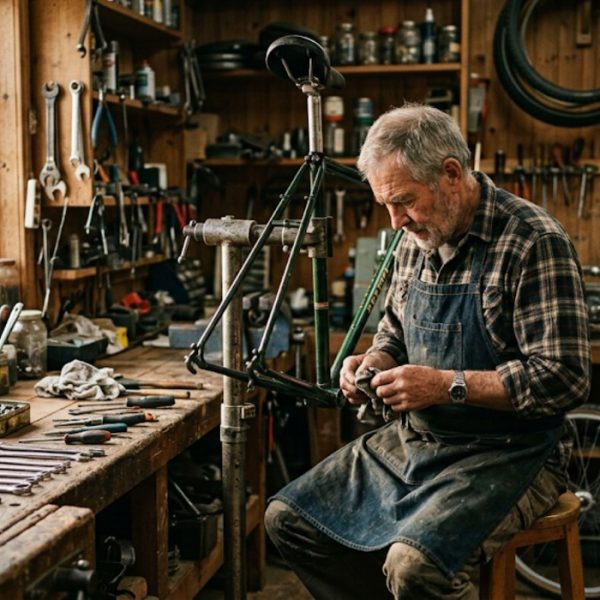
The sociologist Robert Stebbins drew a distinction that has since become standard. Casual leisure is immediately rewarding and requires no training, which covers most television, most socialising and most idle scrolling. Serious leisure is the systematic pursuit of an activity substantial enough to build a career of sorts inside it, with skills to acquire, setbacks to survive and a community of fellow enthusiasts. Amateur astronomers, competitive rowers, restorers of old motorcycles. Project-based leisure sits between the two, a one-off undertaking with a clear end. The categories matter because they predict very different outcomes for wellbeing, identity and social connection.
Leisure has always been a class question
Thorstein Veblen made the point savagely in 1899, arguing that visible idleness was the whole purpose of the leisure class, a way of demonstrating that one did not have to work. The modern version is subtler and runs the other way. Busyness has become the status signal, and admitting to genuine free time can feel like a confession. Access remains unequal in any case. Shift workers, carers and people holding two jobs do not get to schedule an unbroken Sunday afternoon, and no amount of advice about hobbies changes the underlying arithmetic.
The screen problem is not what people assume
Screens are not the enemy of leisure, they are its most efficient delivery mechanism and its most efficient thief at the same time. The research points less at total screen hours and more at whether the time was chosen. Deliberately watching a film you wanted to see is leisure by any definition. Twenty-five minutes lost to a feed you did not decide to open is closer to time evaporating. Anyone who has tried to work out how to reduce screen time tends to discover the same thing, which is that the target is intention rather than volume.
How to choose better without turning it into work
The practical advice from the field is unfashionably modest. Protect blocks rather than minutes. Keep at least one pursuit that has a skill curve, because that is what serious leisure delivers and passive consumption cannot. Do at least one thing with other people present. And resist the urge to optimise, because the moment free time acquires performance targets it stops doing the thing it was meant to do. A survey of the range of hobbies people take up shows most of them are useless in the best sense.
The everyday version
Plenty of people arrive at good leisure without any theory at all. Learning a language by watching television in it, for instance, sits neatly between casual and serious, and there is decent evidence that immersive viewing genuinely helps language learners. That is the shape of the thing. Pleasurable first, quietly cumulative second.
Why any of this matters
Leisure research is not an academic curiosity. It informs how councils fund parks, how planners size sports facilities, how employers think about hours, and how health services understand what actually keeps older people connected. Getting the definition right is the first step in all of it. The study of leisure exists because the time we do not sell to anyone else turns out to be where a great deal of the important stuff happens.