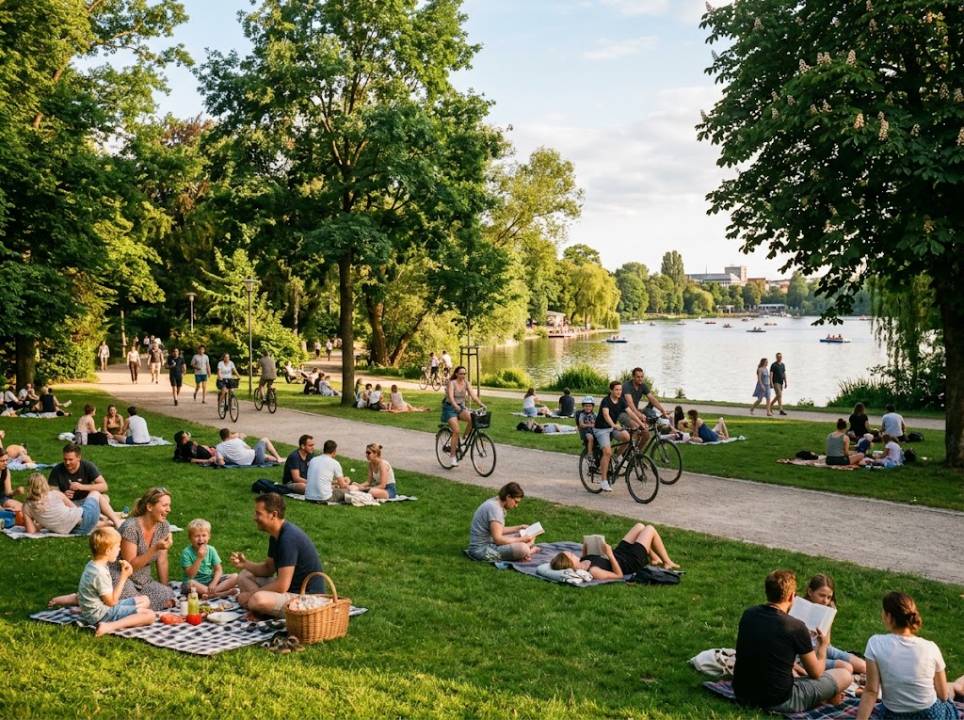
Leisure might sound like a light subject. In fact, it sits at the centre of some of the biggest questions in modern society. How do people spend their free time? Who has access to parks, sport, culture and holidays? How do working hours, technology and inequality shape what we do when we are not working? Leisure studies, and its close cousin tourism studies, have produced a rich body of research on all of these questions.
For students and early-career researchers, the challenge is often not a lack of material but knowing where to start. A good map of the key sources saves months of searching.
The foundations of the field
Leisure studies emerged as an academic field in the second half of the twentieth century, drawing on sociology, economics, geography, psychology and planning. Early classics include Thorstein Veblen's The Theory of the Leisure Class, published in 1899, and Josef Pieper's Leisure, the Basis of Culture. In the 1960s and 1970s, researchers in Britain, North America, France and the Netherlands began systematic studies of time use, recreation and leisure policy.
Methods textbooks
Anyone starting a project in leisure or tourism soon encounters the methods literature. Among the most widely used texts is Tony Veal's Research Methods for Leisure and Tourism, which has gone through several editions and is used in universities around the world. It covers research design, questionnaires, interviews, observation, secondary data and analysis, with examples drawn specifically from leisure and tourism.
Veal has also written extensively on leisure and tourism policy and planning, and on topics such as working time and the four-day week. Collections that bring his books, papers and data sources together in one place are particularly useful for students who want to follow a consistent thread through the field.
Key journals
- Leisure Studies, published in the UK.
- Journal of Leisure Research, from North America.
- Leisure Sciences, with a strong focus on social psychology.
- Annals of Leisure Research, the main Australian and New Zealand outlet.
- Annals of Tourism Research and Tourism Management for tourism-focused work.
International bodies such as the World Leisure Organization also publish material and organise congresses that bring together researchers, practitioners and policymakers from many countries.
Data sources
Much leisure research relies on large datasets. National time-use surveys, household expenditure surveys, sports participation surveys and tourism statistics provide a picture of how people actually spend their time and money. Many countries publish these through national statistics offices, while organisations such as the OECD and UN Tourism compile international comparisons.
Knowing which survey asked which question, in which year, is often the key to a strong dissertation.
Beyond the English-speaking world
English dominates academic publishing today, but some of the most important traditions in leisure research developed in other languages. Students who only read English miss a large part of the story.
The French sociology of leisure
The French sociologist Joffre Dumazedier was one of the founders of the sociology of leisure. His book Vers une civilisation du loisir?, published in 1962, argued that leisure was becoming a central part of modern life and identity. Much of the French debate that followed, on paid holidays, popular education and cultural policy, remains available mainly in French. Researchers working with these texts often use professional french to english translation services to quote and analyse them accurately.
German Freizeitforschung
Germany has its own strong tradition of leisure research, known as Freizeitforschung, with long-running studies of leisure behaviour, tourism trends and time use. Reports from German research institutes and foundations are frequently published only in German. For comparative work, german translation services make it possible to bring this material into English-language theses and publications without losing nuance.
Working with translated sources
Researchers who regularly handle sources in several languages, or who translate their own questionnaires for cross-national surveys, benefit from proper tools. If you are wondering what is a CAT tool, it is software that helps translators work consistently by storing previous translations and terminology. For a survey translated into five languages, it ensures that a key term such as "leisure participation" or "free time" is rendered the same way in every question.
Questionnaire translation deserves special care. Researchers usually follow a process of translation, back-translation and testing to make sure that questions mean the same thing in each language and culture.
Tips for building a literature review
- Start with a recent textbook to map the main debates.
- Follow references backwards to classic studies.
- Use citation searches to find newer work that builds on key papers.
- Look for national traditions in other languages, not just English.
- Keep a structured reference database from day one.
- Note which datasets each study used, and when.
Current themes
Today, leisure research addresses digital leisure and screen time, wellbeing, climate impacts of tourism, accessibility for disabled people, leisure in ageing societies and debates about shorter working weeks. Each of these topics connects leisure to wider social and economic change.
Why it matters
Leisure is where many people find meaning, health, community and joy. Understanding it helps governments plan parks and transport, helps businesses design better services and helps societies think about how work and life should fit together. Good leisure research starts with good sources, in whatever language they were written.